
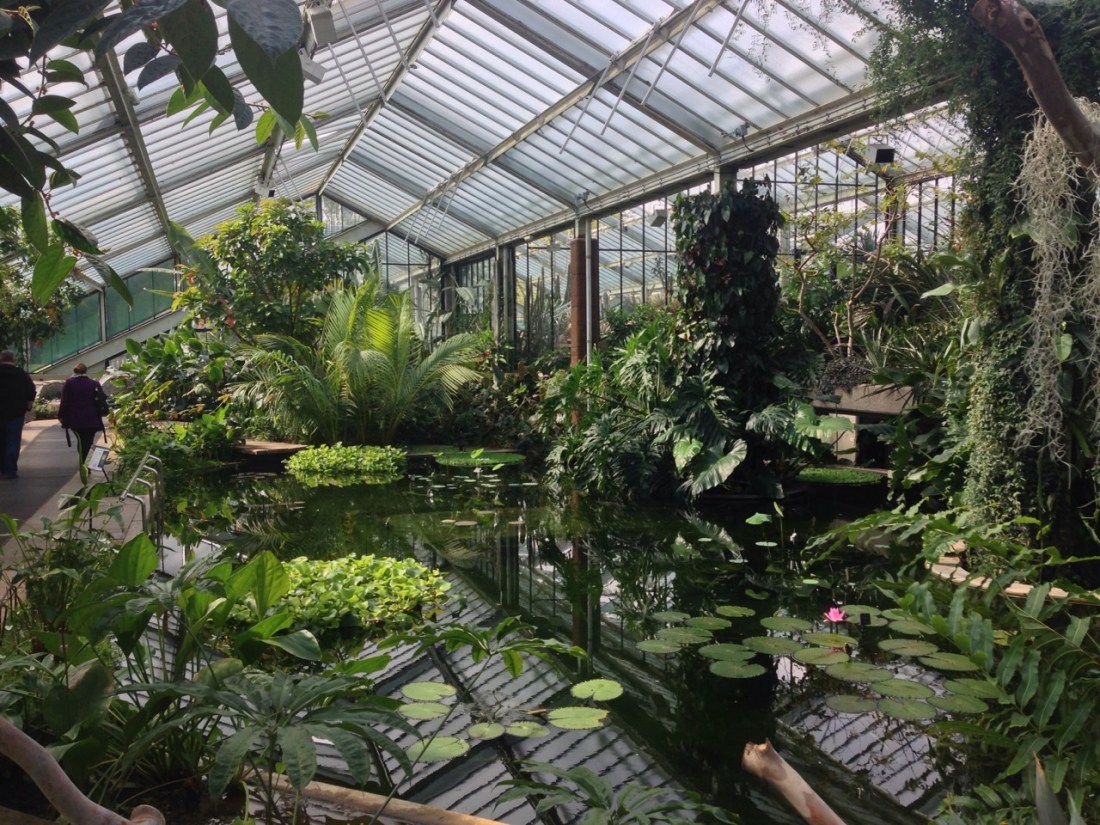
Tag: plants
Fun Facts about Plants from Your Friendly Botany Major
• Cacti are some of the only plants to photosynthesize from their stems. Their needles are really just modified leaves.
• Avocados are only around because people pollinate and disperse them by hand. The large seed is indigestible to small mammals now. It was originally eaten by giant sloths who would poop them out far away from the parent tree so they can grow. This is called an evolutionary anachronism.
• Banana candy does not taste like bananas because it was designed to taste like the Gros Michel banana which was eaten in the pre-1950s. It was wiped out by a fungus called panama disease. Since bananas are asexual all of them are genetically identical making it easy to wipe them all out at once. However fungus is sexual so it evolves more quickly. This means eventually we may lose the modern banana, the Cavendish, to it as well.
• There are actually three different types of photosynthesis: C3, C4, and CAM. Which type is used depends on the aridness of the environment, and are increasingly more efficient as listed.
• Moss is amazing. The fuzzy part of the moss is called the gametophyte stage and it is haploid meaning it has one set of chromosomes like a sperm or an egg cell in humans. If you look closely, sometimes you will what look like little tiny seeds on stems coming out of the main body. This is the sporophyte stage and it’s diploid, or has two sets of chromosomes, like our body cells. Moss is the oldest type of plant.
• You can usually tell what animal pollinates a plant by the color and shape of its flowers. Red flowers are hardly ever pollinated by bees because bees cannot see red well. Butterfly flowers have long deep centers. Bird pollinated plants can bear weight and are wide and open. Bat pollinated plants usually smell strongly and are darkly colored.
• Almost all American native elms and chestnut trees are extinct because of fungi. Asian chestnut and elm have replaced them, because they are resistant to the strains.
• There is a type of fern that has over 1200 chromosomes. For reference, humans have 46.
• If you shine consistent low level red light on a plant it will grow extremely tall, because red light tells the plant it is being shaded by and competing with other plants. If you shine consistent green light on a plant it will not sprout or die (if already sprouted) because plants absorb red and blue light to use. This is also why plants are green, because the unused green light is reflected back out.
TLDR; Plants are frickin cool and should get as much love as our animal friends.
get a green thumb
basic gardening guide for indoor gardeners
climate & light
- Research your climate zone [usa] [ca]. Buy plants that are recommended for your climate zone.
- Note the sunniness of where you are going to grow your plants.
- no direct sun at all (still needs ambient light) = full shade
- sun in morning/evening shade for rest of the day = part shade
- sun all day = full sun
- shade in morning/sun for rest of the day = sunny, part sun
- follow these guidelines:
- south window = sunny, part sun, sometimes full sun
- east window = part shade
- west window = part shade
- north window = full shade
- sun bulbs can be purchased to encourage indoor growth.
- indoor plants used to low light might easily burn and dehydrate if left in full sun for too long, even if they are normally hardy plants.
soil & drainage
- basic potting soil or gardening soil is “universal” for almost all plants.
- major exception:
- cactus & succulents = rocky, sandy, succulent soil is necessary for proper drainage
- all plants need proper drainage or else they will ‘drown’. Choose only containers with holes in the bottom. Use a thin layer of rocks and/or gravel at the bottom of containers to ensure the hole is not clogged with soil.
watering
- water less = cooler, cloudy, low wind, humid, rainy.
- water more = warmer, sunny, windy, dry, no rain.
- note the type of container you have used.
- dries out more slowly, water less = metal, plastic, glazed ceramic, light colors in sunlight, nonporous.
- dries out more quickly, water more = terracotta, wood, moss, dark colors in sunlight, porous.
- indoor gardeners, plants with smaller root systems need less water. Watering them more will drown them; not encourage them to grow. The roots cannot drain the soil and the water will sit, drowning the tender root system 😦 this applies primarily to container gardening.
- no need to water daily. water when the plant tells you it is ready:
- its leaves droop (aim to water a day before this hits!)
- it begins to stop being glossy and starts looking a bit drab
- the soil is dry 1 to 2 inches down
- the pot is lighter because the soil is dry (lift pots before and after watering to compare)
- you want your plant’s root ball to be moist.
- when roots dry, they shrink, pulling away from the edges of the pot.
- when you add water to the pot, it follows the path of least resistance around the edges of the pot, straight past the root system.
- to fix this, soak the plant once in water. then, water again.
- if a plant is not seeming to be hydrated no matter how much you water, it is possible all your water is draining off to the sides and never reaching the actual root ball. to fix:
- soak thoroughly in water several times.
- place your container in a tray of water and let osmosis or whatever suck that water right up straight to the root.
- avoid frequent, small waterings. this encourages the plant’s roots to grow too close to the surface. It is best to thoroughly water plants then let them dry out slightly before you water again (no need to let the leaves droop or anything – just wait until the plant is ready again, as described above).
getting a plant from a nursery
- choose smaller plants as long as they are healthy.
- smaller plant = smaller root system, healthy.
- larger plant = big root system, curled and unhealthy in small commercial pot.
- young plants with fruit or flowers = prematurely grown, highly stressed, unhealthy.
- healthy plants have several identifiable traits.
- they are colorful and lush
- they are firm and do not have mushy stems or leaves
- they have thick white roots
- they are free of brown, white, or yellow spots
- they are free of bug bites and infestation
transplanting a new plant to a pot
- get the right sized pot.
- too big = easily drown plant in soil that cannot drain.
- too small = root system curls in an unhealthy way, not properly sized.
- the “right sized” pot is based on the current size and future growth of the plant.
- if a plant is 10-12 inches tall, give it an 8 inch diameter pot.
- if the plant is 2-3 feet tall, give it a 24 inch diameter pot.
- with a new nursery plant, get a container giving about 2 extra inches on each side of the plant.
- get a container tall enough that you can have 2 inches of soil at the bottom of the container, a plant, and one inch of space between the topsoil and the lip of the container. This gives you plenty of room to water!
- ensure your drainage hole is properly covered with mesh or a stone to prevent soil from falling out or clogging it.
- moisten your potting soil if it is really dry. Mix some in a pail or bucket with water until it has the texture of a squeezed sponge.
- ensure the nursery plant is damp enough to transplant. If the soil is too dry the root system will not hold the dirt together and everything will just fall apart (!!!). Soak your nursery plant for 30 minutes in water.
- fill the space around the plant with potting soil, leaving one inch of free container space above the plant.
- although the soil and plant should both be damp, you must now water your transplanted baby to ensure all air pockets are eliminated and that the soil has settled around the root ball.
- even if plant is “full sun” do not simply place a young plant right outside for hours and hours. “Harden off” plants by slowly introducing them to the sun for an hour at a time and progressing over a course of days until they are ready for full sun.
enjoy plants :3
extensively plagiarized from Container Gardening for Dummies
Fun Facts about Plants from Your Friendly Botany Major
• Cacti are some of the only plants to photosynthesize from their stems. Their needles are really just modified leaves.
• Avocados are only around because people pollinate and disperse them by hand. The large seed is indigestible to small mammals now. It was originally eaten by giant sloths who would poop them out far away from the parent tree so they can grow. This is called an evolutionary anachronism.
• Banana candy does not taste like bananas because it was designed to taste like the Gros Michel banana which was eaten in the pre-1950s. It was wiped out by a fungus called panama disease. Since bananas are asexual all of them are genetically identical making it easy to wipe them all out at once. However fungus is sexual so it evolves more quickly. This means eventually we may lose the modern banana, the Cavendish, to it as well.
• There are actually three different types of photosynthesis: C3, C4, and CAM. Which type is used depends on the aridness of the environment, and are increasingly more efficient as listed.
• Moss is amazing. The fuzzy part of the moss is called the gametophyte stage and it is haploid meaning it has one set of chromosomes like a sperm or an egg cell in humans. If you look closely, sometimes you will what look like little tiny seeds on stems coming out of the main body. This is the sporophyte stage and it’s diploid, or has two sets of chromosomes, like our body cells. Moss is the oldest type of plant.
• You can usually tell what animal pollinates a plant by the color and shape of its flowers. Red flowers are hardly ever pollinated by bees because bees cannot see red well. Butterfly flowers have long deep centers. Bird pollinated plants can bear weight and are wide and open. Bat pollinated plants usually smell strongly and are darkly colored.
• Almost all American native elms and chestnut trees are extinct because of fungi. Asian chestnut and elm have replaced them, because they are resistant to the strains.
• There is a type of fern that has over 1200 chromosomes. For reference, humans have 46.
• If you shine consistent low level red light on a plant it will grow extremely tall, because red light tells the plant it is being shaded by and competing with other plants. If you shine consistent green light on a plant it will not sprout or die (if already sprouted) because plants absorb red and blue light to use. This is also why plants are green, because the unused green light is reflected back out.
TLDR; Plants are frickin cool and should get as much love as our animal friends.
 I feel the mountains burn inside